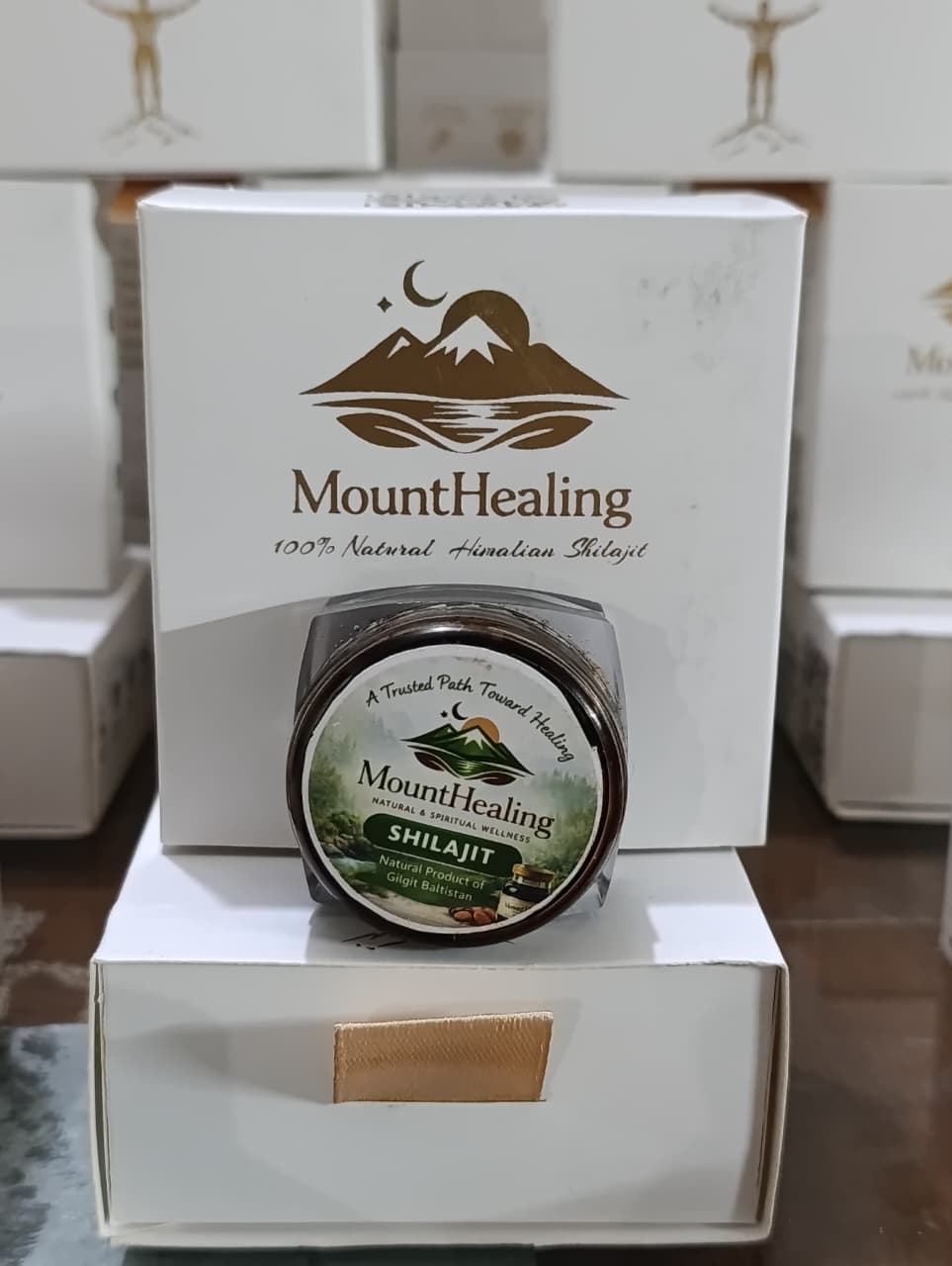
Mount Healing Shilajit
🌿 Pure Shilajit from the Mountains of Gilgit-Baltistan
Rs 2500.00Rs 1500.00
Experience the power of nature with Mount Healing Shilajit, a premium natural supplement sourced from the pristine mountains of Gilgit Baltistan. Perfect for daily health boosts, enhanced energy, and overall wellness, this pure Shilajit is trusted for its healing benefits. Mix easily in milk or water for a revitalizing drink. Ideal for those seeking a holistic well-being solution straight from the mountains.
Traditional and Modern Uses: Shilajit is a dark, tar-like resin valued in Ayurvedic medicine as a powerful rasayana (rejuvenator) that promotes longevity, strength, and vitality. Classical Ayurvedic texts and ethnobotanical sources list shilajit for many conditions – from digestive and respiratory ailments to genitourinary, nervous, and spleen disorders. In practice, Himalayan communities often mix a small amount of shilajit resin into warm milk or tea, giving it to adults 30 minutes before breakfast or 1 hour before bed for general wellness. Today, it is marketed as a nutritional supplement rich in fulvic acid, minerals, and antioxidants, with claims (often under research) for boosting energy, cognitive function, immunity, and anti-aging.
Energy & Endurance: Shilajit’s fulvic and dibenzo-alpha-pyrones compounds support mitochondrial function. Animal studies and small trials report reduced fatigue and improved physical performance with shilajit, suggesting enhanced energy production.
Cognitive Support: Fulvic acid in shilajit has neuroprotective effects. Laboratory studies show it may inhibit aggregation of tau and amyloid proteins (factors in Alzheimer’s) and support brain cell function. Some small trials suggest improved memory and alertness, though larger clinical data are still needed.
Antioxidant & Anti-Aging: Shilajit is very rich in antioxidants (notably fulvic acid) and trace minerals, giving it strong free-radical–scavenging properties. This may slow cellular aging and protect organs. For example, one trial found shilajit increases antioxidant enzymes (SOD, vitamins C/E) in healthy adults.
Immune Modulation: Ayurvedic tradition uses shilajit to balance immunity. Research indicates shilajit and fulvic acid can modulate immune responses – enhancing defense when needed and dampening excessive inflammation. It has shown anti-allergic and immunomodulatory effects in laboratory studies.
Inflammation Relief: Shilajit exhibits both anti-inflammatory and pro-inflammatory actions in studies. Some findings suggest it can inhibit inflammatory mediators like histamine and support healthy inflammatory balance, though results are mixed and require more research.
Hormonal Health & Fertility: In men, shilajit has a long history as an aphrodisiac. A controlled trial found men (ages 45–55) taking 250 mg shilajit twice daily for 90 days had significant increases in total and free testosterone and DHEA-S. In infertile men, 100 mg twice daily for 90 days raised sperm count (+61%) and motility. No adverse effects on liver or kidney function were seen.
Adaptation to Stress (Altitude, Exercise): Due to its nutrients and antioxidant power, shilajit has been used for altitude sickness and as an “adaptogen.” It supplies electrolytes and fulvic acid, which may help counteract oxygen stress. (E.g., Fulvic-rich shilajit is thought to improve acclimatization to high altitude.) An 8-week trial (250 mg twice daily) showed muscle tissue changes suggesting improved repair and adaptation, which could benefit athletes.
Bone & Joint Support: Preliminary data indicate shilajit may aid bone health. In middle-aged women, supplementation (125–250 mg twice daily) enhanced skin microcirculation and activated collagen-related genes. Other small studies suggest shilajit may promote bone healing and reduce bone loss, though definitive human trials are lacking.
Cardiometabolic Health: In healthy adults, very high-dose shilajit (2 g/day) over 45 days showed no safety issues and improved heart-healthy lipids (lower LDL, higher HDL). This suggests shilajit’s antioxidant effects may support cardiovascular wellness, but more research is needed.
Healthy Adults: Start with a small dose of purified shilajit resin (around a pea-sized portion, ≈300–500 mg) once daily. Many users take 300–500 mg daily (e.g. 150–250 mg twice a day). Studies and supplement guidelines generally use 200–1000 mg per day; doses up to 2000 mg/day have been tolerated in research.
Elderly: Older adults may use similar amounts (≈250–500 mg/day). In one trial of seniors (60–80 years) with hypertension, 500 mg twice daily (1000 mg/day) for 30 days was well tolerated and reduced oxidative stress. As a precaution, start at the lower end of the dose range and monitor for effects.
Athletes/Fitness: Some athletes use shilajit for enhanced recovery and endurance. A common regimen is 250–500 mg twice daily (total 500–1000 mg/day) around training days. 250 mg twice daily promoted muscle ECM and repair genes in a trial. (Always adhere to sports regulations; choose certified brands to avoid banned contaminants.)
Note: Because shilajit is a potent supplement, it’s wise to start with a low dose and increase gradually. Always use a standardized, purified preparation.
Preparation: Measure a small portion of resin (about the size of a rice grain or pea, roughly 300–500 mg).
Mixing: Dissolve the resin in a warm liquid. Traditional practice favors warm milk or tea, which helps fully dissolve shilajit and may improve absorption. Heat does not destroy shilajit’s nutrients. Stir well until the resin is fully dissolved (it mixes readily in warm water or milk).
Timing: Drink the mixture once or twice daily. Many take shilajit in the morning for energy; some take the second dose early afternoon. It can be taken with or without food, but starting on an empty stomach or with breakfast (as in Ayurvedic tradition) is common. Avoid taking very late at night (some advise finishing doses at least 1–2 hours before bed).
Enhancers: For taste or synergy, shilajit is often mixed with honey, ghee, or oil (like ghee or sesame oil) per Ayurveda. Others add it to smoothies or coffee. Use clean, filtered water or high-quality dairy. If taking capsules, simply swallow with water.
Frequency: Typical use is once or twice a day. In clinical studies, dosing ranged from 2–4 weeks up to several months. For general wellness, daily use (with periodic breaks if recommended by an Ayurvedic practitioner) is standard. Always follow product guidelines.
Purity First: Only use purified, lab-tested shilajit. Raw shilajit may contain heavy metals (lead, mercury, etc.), mycotoxins and other impurities. Look for brands.
Possible Side Effects: Shilajit is generally well-tolerated, but mild side effects can occur. These include digestive upset (nausea, diarrhea), headache, or dizziness. Rare allergic reactions (rash, rapid heartbeat, blood pressure changes) have been reported. Always start with a low dose to assess tolerance.
Contraindications: Avoid shilajit if you have certain conditions: Hemochromatosis, thalassemia or sickle cell anemia, because shilajit’s high iron could exacerbate these. Use caution (or avoid) during pregnancy or breastfeeding, as safety data are limited. People with kidney stones or gout should consult a doctor first, since shilajit contains minerals that could aggravate these conditions.
Medication Interactions: Shilajit can affect blood pressure and blood sugar. It may enhance the effects of antihypertensive or antidiabetic drugs, so monitor levels closely if on such medications. Its influence on hormones means it could interact with hormone therapies. Always consult a healthcare provider before combining shilajit with prescription drugs.
Quality Warning: Many reported “adverse effects” are actually due to contaminated products. The UK OPSS and other agencies have warned that some supplements marketed as shilajit contained unsafe levels of heavy metals or undeclared drugs. Buy only high-quality brands.
Monitoring: If unusual symptoms arise (e.g. palpitations, rash, severe GI distress), discontinue use and seek medical advice. Periodic breaks (e.g. 1–2 weeks off per month of use) can be considered, although formal guidelines on cycling are not established.
Sources & Credibility: This guide is based on Ayurvedic tradition and modern research from peer-reviewed journals, clinical trials, and health authorities. Notable studies and reviews have been cited above; reputable health organizations (e.g. Cleveland Clinic, NIH-affiliated research) generally view shilajit as a potentially beneficial supplement when used correctly, but emphasize the need for high-quality purified products
. Always prioritize formulations with clear sourcing and testing, and consult professionals for personalized advice.